The Visual Architecture of Seamless Gradient Square Patterns in Modern Design
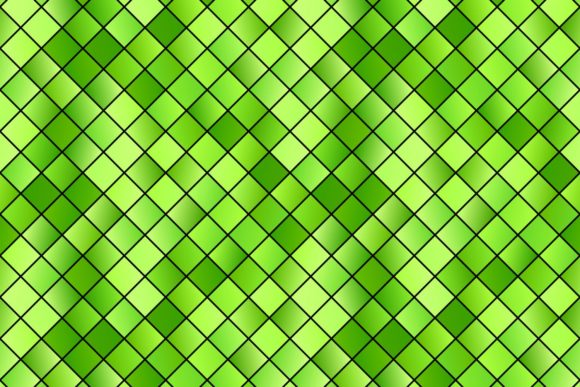
Patterns built on repeating squares carry an inherent sense of order, yet when infused with gradients, they break free from rigidity into something dynamic. A seamless gradient square pattern marries geometric precision with fluid color transitions, creating a visual language that feels both structured and alive. This combination has become a cornerstone across digital and print media, offering designers and businesses a versatile tool that scales from subtle texture to bold statement.
The appeal lies in the tension between uniformity and variation. Squares provide a grid-like foundation that the human eye finds stable, while gradients introduce movement, depth, and mood. Together, they produce backgrounds and design elements that can anchor a brand identity or elevate a user interface without overwhelming content.
The Science Behind Geometric Repetition and Color Flow
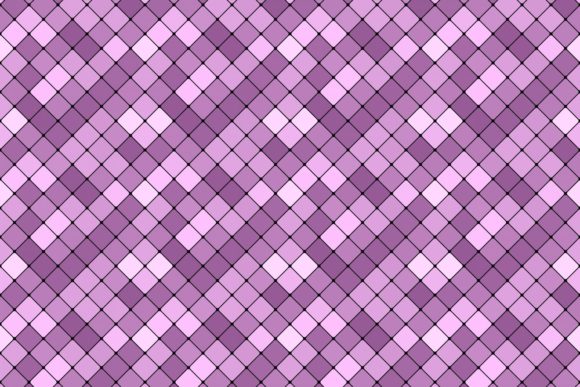
Understanding why these patterns resonate begins with perception. The human visual system is wired to recognize repeating structures—it's how we make sense of chaos. When squares repeat in a grid, the brain registers predictability and comfort. However, a colorful geometric vector graphic layered with gradient transitions adds a secondary visual layer: the slow shift from one hue to another engages peripheral vision and creates a sense of motion.
This dual stimulation is why abstract geometrical square pattern backgrounds feel engaging without being distracting. The repetition grounds the viewer; the gradient keeps them curious. In practice, this means a website background using such a pattern can hold attention longer than a flat color, while still allowing foreground text and imagery to remain legible.
- Structured foundation: The square grid creates a clear visual framework.
- Emotional range: Gradients can convey calm (blue to teal), energy (yellow to red), or sophistication (monochromatic dark tones).
- Depth illusion: When gradient directions vary per square, the pattern can appear three-dimensional.
Designers leverage this science to evoke specific psychological responses. A pastel gradient square pattern in a meditation app instills tranquility, while a high-contrast neon version signals innovation at a tech conference.
Bringing Patterns to Life Across Industries
The reach of seamless gradient square patterns extends far beyond simple decoration. Professionals across fields integrate them into core visual assets because they solve real communication challenges.
Branding and Identity Systems
Modern brands often need flexibility across platforms. A seamless gradient square pattern can serve as a secondary brand element—used on social media graphics, packaging, and presentation templates—that ties diverse materials together. Unlike a logo, which must remain fixed, the pattern can shift colors to match seasonal campaigns while retaining brand recognition. For example, a fitness brand might use a vibrant orange-to-purple square gradient in summer promotions and a cooler blue-green version during winter, all while preserving the same geometric DNA.
Business owners appreciate that a vector-based pattern, such as a vector EPS or vector AI file, can be scaled to any size without losing quality. This means the same asset works on a business card and a billboard.
Digital and Print Media
In digital spaces, an abstract geometrical square pattern background provides texture that improves user experience. It reduces visual fatigue compared to plain backgrounds, yet remains unobtrusive when opacity is lowered. UI designers often use these patterns in hero sections, behind testimonials, or as subtle dividers between content blocks.
Print applications are equally robust. A JPG 5000x5000 pixel file offers enough resolution for large-format posters, brochures, and book covers. The high pixel density ensures that gradient transitions remain smooth, with no visible banding when printed at high DPI. Publishers and print shops value this reliability, especially for projects requiring vivid, consistent color reproduction across multiple copies.
Environmental and Product Design
Physical spaces benefit from these patterns too. Wall murals, window films, and textile designs featuring seamless gradient square patterns bring a contemporary feel to offices, retail stores, and hospitality venues. Because the pattern repeats without visible seams, it wraps around corners and covers large surfaces naturally.
Product packaging also gains shelf appeal. A cosmetic brand using a dual-tone square gradient on its boxes communicates both precision (the square shape) and luxury (the smooth color transition). Consumers associate this visual clarity with premium quality.
Decoding the Technical Formats: When to Use What
Choosing the right file format is essential for maximizing the potential of any abstract geometrical square pattern background. The three primary formats offered—JPG, EPS, and AI—serve distinct purposes, and understanding their differences prevents workflow bottlenecks.
| Format | Best For | Key Strength |
|---|---|---|
| JPG 5000x5000 | Immediate use in web, mockups, and print | High resolution, ready to place |
| Vector EPS | Cross-platform editing and scaling | Universal vector compatibility |
| Vector AI | Customization in Adobe Illustrator | Full editability of paths and gradients |
Raster vs. Vector: Making the Right Choice
The JPG version is a raster file—each pixel carries color information. At 5000x5000 pixels, it's large enough for most commercial uses, but scaling it beyond 100% may introduce pixelation. This format shines when you need a ready-to-use background without further editing. Web developers often prefer it for site backgrounds because it loads quickly and renders predictably across browsers.
Vector files (EPS and AI) are resolution-independent. A seamless gradient square pattern saved as a vector can be scaled to any dimension—from a favicon to a stadium banner—without quality loss. This is critical for graphic designers who need to resize patterns for multiple deliverables. The AI format additionally preserves editable gradient swatches, layers, and individual square objects, allowing deep customization.
Integrating These Patterns into Creative Workflows
For designers and creative teams, incorporating a colorful geometric vector graphic of this type is straightforward, but a few best practices maximize efficiency.
- Start with the AI file for customization. Open the vector AI in Illustrator to adjust gradient colors, square size, or rotation. This gives you full control over the pattern's personality.
- Export specific versions. From the AI master, export a high-res JPG 5000x5000 for web and print, and an EPS for collaborators using different software (CorelDRAW, Affinity Designer, etc.).
- Test opacity and blending modes. In many design contexts, reducing the pattern to 20–40% opacity over a solid color background yields a sophisticated texture. Overlay modes like Multiply or Soft Light can produce unique atmospheric effects.
- Consider the end medium. Screen-based projects may require sRGB color space, while print jobs demand CMYK. Converting the pattern's color profile at the outset prevents surprises.
Hobbyists and educators also find these patterns useful for teaching color theory or geometry. A student can study how gradient direction affects perceived depth, or how square size alters rhythm. The seamless nature of the pattern eliminates distracting edges, allowing focus on the visual principles at play.
Color, Scale, and Composition Considerations
Not every abstract geometrical square pattern background performs equally in every application. Key variables influence how the pattern is perceived and how functional it remains.
Color harmony is paramount. Gradients that transition between complementary colors (blue and orange, for instance) create high energy, while analogous colors (blue to green) feel cohesive and restful. For business applications, avoiding harsh contrasts in the pattern itself keeps it professional and non-fatiguing during prolonged viewing.
Scale and density matter enormously. A pattern with very small squares reads as a fine texture, almost like fabric. Enlarged squares become distinct graphic elements. Some designers use the same pattern at two scales within one layout—fine for background texture and large as a focal accent—to create visual hierarchy without introducing a second asset.
Orientation and flow also affect user experience. A diagonal gradient across squares suggests movement and speed, making it suitable for sports or entertainment contexts. A vertical gradient feels elevating and calm, appropriate for wellness or finance. Horizontal transitions are neutral and frequently used in tech interfaces.
Future Trends and Evolving Uses
As design tools grow more sophisticated, seamless gradient square patterns are finding new life in motion graphics and interactive media. Animating the gradient cycle within the squares creates a breathing effect that adds life to a webpage without video file weight. This technique is gaining traction in brand storytelling, where a static pattern transforms into a dynamic background.
Artificial intelligence tools are also beginning to generate custom variations of these patterns based on brand color palettes, allowing non-designers to create professional backgrounds quickly. However, the vector AI and vector EPS files remain the gold standard for those who need precise, manual control.
Researchers in visual perception continue to study how repeating geometric gradients affect cognitive load and attention. Early findings suggest that well-designed patterns can actually improve focus by providing a non-disruptive visual anchor—an insight that could influence everything from classroom materials to cockpit displays.
Whether used as a subtle texture or a bold graphic, the abstract geometrical square pattern background format offers remarkable versatility. By understanding the interplay of shape, color, scale, and file format, creators can deploy these patterns with intention and impact, elevating visual communication across any medium.