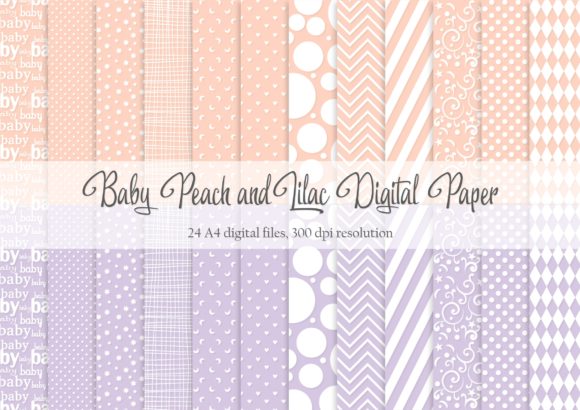
Unlocking Creativity with Baby Peach and Lilac Digital Paper
The world of digital crafting has expanded dramatically, offering tools that merge convenience with artistic expression. Among these assets, themed digital paper sets stand out for their ability to transform ordinary projects into visually striking creations. A particularly versatile example is the Baby Peach and Lilac Digital Paper set, which combines soft, inviting hues with high-quality production standards. With 24 A4 digital files in this set, saved at 300 dpi resolution, users gain access to a range of patterns and textures that support everything from intimate card making to large-scale scrapbooking layouts. This article explores the practical value of such a collection, focusing on its characteristics, advantages, and realistic applications across different creative workflows.
Key Specifications and Their Practical Implications
Understanding the technical details of the Baby Peach and Lilac Digital Paper set is essential for maximizing its use. The 24 A4 digital files are designed to fit standard A4 paper dimensions, which align with many common printers and cutting machines. The 300 dpi resolution ensures that every pattern retains crisp edges and smooth color transitions, even when printed at full size. This high dot-per-inch density means that for close-up work—such as embellishments on a greeting card or intricate die-cuts—the paper will not exhibit pixelation or blur. For digital projects, such as website backgrounds or social media graphics, the resolution supports sharp rendering on high-definition screens. The peach and lilac color palette is carefully balanced: peach brings warmth and energy, while lilac adds calm and sophistication. Together, they create a harmonious range that works well in gender-neutral themes, spring designs, baby showers, and elegant stationery. Because the files are digital, users can store them indefinitely without degradation, resize them for smaller formats without losing quality, and duplicate prints as needed.
Color Psychology and Design Cohesion
Color choices heavily influence the mood of any project. The peach tones in this digital paper evoke feelings of freshness, tenderness, and approachability, making them ideal for content aimed at families or personal celebrations. Lilac, meanwhile, carries associations with serenity, creativity, and subtle luxury. When paired, these colors create a visual tension that is both soothing and engaging. For educators creating classroom materials, this palette can make learning resources feel playful yet professional. Business owners might use these papers for brand packaging that needs a gentle, premium look without being overly feminine or masculine. The set likely includes a mix of solid textures, floral motifs, geometric patterns, or subtle stripes—common in such collections—allowing users to mix and match across projects without clashing. Observing how light and dark variations of each color appear in the files can help planners design coherent layouts where backgrounds and accents complement rather than compete.
Use Cases Across Diverse Audiences
The Baby Peach and Lilac Digital Paper set is not limited to a single niche. Its versatility stems from the neutral yet distinctive color story and the inclusion of multiple patterned files. Below are practical scenarios where these digital papers shine, organized by user type and goal.
- Scrapbooking enthusiasts: Scrapbookers often need a cohesive palette for multi-page layouts. Using this set, a creator can dedicate one lilac pattern for background pages, a peach pattern for matting photos, and a combined motif for borders or journal cards. Because A4 files are large enough for 12x12 inch pages with trimming, there is minimal waste. The 300 dpi ensures that printed text overlays remain legible.
- Card makers: Handmade cards benefit from the elegance of digital paper. A card maker might select a subtle peach stripe for the card base, then layer a lilac floral cutout using a craft knife or die-cutting machine. The high resolution prevents rough edges on small elements. These cards suit occasions like birthdays, thank-you notes, or new baby announcements.
- Digital crafters and planners: For those who work entirely on tablets or computers, the digital papers can be imported into apps like Procreate, GoodNotes, or Canva. Users can resize the A4 files to fit planner pages, sticker sheets, or digital scrapbooks. The peach and lilac combination adds a consistent aesthetic to weekly spreads or goal-setting templates.
- Small business owners: Entrepreneurs selling handmade goods can use these papers for product packaging, thank-you cards, or social media templates. The cohesive color palette helps build brand recognition. For example, a soap maker might wrap products with a printed lilac geometric pattern, while an Etsy shop owner uses peach backgrounds for listing photos to create a warm, inviting storefront.
- Educators and content creators: Teachers designing worksheets or classroom decorations benefit from the non-distracting patterns. A lilac background with subtle dots could anchor a reading activity, while peach borders frame key instructions. Content creators on YouTube or Instagram can use the papers as backdrops for unboxing videos or flat-lay photography, relying on the 300 dpi for sharp video capture.
- Hobbyist designers: Anyone exploring digital design can practice layering, masking, and color theory with these papers. The set provides immediate, ready-to-use assets without needing to create patterns from scratch. This accelerates learning while producing polished results for personal or client projects.
Workflow Integration and Practical Tips
Integrating the Baby Peach and Lilac Digital Paper set into existing workflows is straightforward, but a few considerations can improve outcomes. Since the files are A4 and 300 dpi, they occupy a reasonable amount of storage space—typically a few megabytes each, making them easy to organize in folders by color or pattern type. For printing, users should ensure their printer settings match the document dimensions and resolution to avoid scaling errors. Using high-quality paper, such as matte cardstock or photo paper, enhances the tactile feel and color saturation. When using these papers digitally, compressing files for web use may be necessary to maintain quick loading times, but retaining original copies preserves flexibility for high-resolution outputs.
Combining Patterns and Textures
One natural technique is to pair busy patterns with solid or subtle backgrounds. In this set, a peach floral file might serve well as an accent strip, while a lilac solid texture forms the main backdrop. Alternating pattern density across different sections of a layout creates visual rhythm without overwhelming the viewer. For example, in a scrapbook page about a garden party, one could use a lilac polka dot for the base, a peach stripe for photo mats, and a small peach blossom motif for corner embellishments. The key is to limit the number of distinct patterns on a single spread—typically two or three—to maintain harmony. Users can also reverse colors: if a project initially uses peach as the dominant color, swapping to lilac for another page provides fresh variety while staying within the same set.
Observations on Digital Paper Trends
Digital paper sets like Baby Peach and Lilac reflect broader trends in the craft and design industries. There is growing demand for cohesive collections that reduce decision fatigue, especially among hobbyists who value time efficiency. The shift toward digital files also aligns with sustainability goals, as creators can print only what they need and avoid waste from unsold paper rolls. Additionally, the rise of hybrid crafting—combining digital design with physical assembly—means that files must work across multiple platforms. The 300 dpi standard has become a benchmark for professional and amateur use alike, ensuring that prints match the quality of store-bought cardstock. Color trends in 2024–2025 continue to favor pastels with a twist: not just baby pink or pale blue, but nuanced shades like peach and lilac that feel both nostalgic and contemporary. This set captures that aesthetic without being overly seasonal, allowing year-round applicability.
Considerations for Different Output Methods
When using the digital paper for laser cutting or scoring machines, such as a Cricut or Silhouette, the A4 size should be matched to the machine's cutting mat. Most software accepts standard resolution images, but it is wise to test a small cut before committing to a full sheet. For sublimation on fabrics or ceramics, the high resolution ensures that transferred patterns retain fine detail. However, sublimation inks may shift color slightly, so sampling a peach or lilac print on the intended material is recommended. In digital-only projects, such as screen backgrounds or presentation slides, the files can be resized upward with care; while 300 dpi at A4 is sufficient for most screens, large-scale displays might require upscaling with interpolation tools to maintain sharpness.
Real-World Examples Demonstrating Versatility
Consider a freelance event planner designing invitation suites for a baby shower. They could use the Baby Peach and Lilac Digital Paper to create a unified look: a lilac envelope liner from one pattern, an invitation card backed with a peach motif, and matching thank-you tags. The 24 files provide enough variety for each component to feel unique yet connected. Another scenario involves a primary school teacher preparing a spring-themed bulletin board. By printing multiple lilac and peach files, they can cut letters, shapes, and borders without needing to purchase separate decorative paper rolls. The digital nature allows last-minute adjustments—if a pattern doesn't fit, a different file is instantly available. For a digital illustrator creating a pack of printable stickers, using these papers as backgrounds or textures adds depth to the sticker designs without extra drawing time. The set becomes a resource that supports rapid prototyping and final production alike.
Adapting for Business Branding
Small businesses often struggle to maintain consistent visual identity across marketing materials. A local bakery, for instance, could use the peach and lilac palette for their website hero images, product labels, and social media posts. The digital paper files can be edited to include text overlays, logos, or product photos. Because the set is cohesive, all materials automatically share a common look, which builds brand recall. The high resolution ensures that labels printed at home or at a commercial shop remain professional. Business owners who sell digital products, such as planners or templates, can also bundle the papers as bonuses for customers, increasing perceived value without additional design work.
Final Observations on Practical Use
No digital asset is inherently complete without understanding its constraints. The Baby Peach and Lilac Digital Paper set, while versatile, may not suit projects requiring neon brightness, dark gothic mood, or primary color intensity. Its strength lies in gentle, sophisticated applications. Users should also account for monitor calibration differences; what appears on screen may not match the printed hue exactly. Ordering a test print or using a color calibration device can mitigate surprises. For digital use, file naming conventions and folder organization save time when searching for specific patterns across 24 files. Some users prefer to create a quick reference sheet—a collage of all patterns with identifiers—to streamline selection. These minor adjustments elevate the experience from simple usage to efficient mastery.
Ultimately, the combination of 24 A4 digital files at 300 dpi, centered on a baby peach and lilac palette, offers a foundation for endless creative experiments. Whether the goal is to craft a heartfelt card, design a cohesive brand look, or educate with engaging visuals, this set delivers reliability and aesthetic appeal. By focusing on the practical interplay of color, resolution, and format, users can unlock new possibilities in both digital and physical realms. The true value emerges not from the files alone, but from how they are woven into individual workflows and visions.