Watercolor Tulips Background: A Versatile Design Resource for Modern Creatives
Floral motifs have long held a special place in visual design, and few flowers carry the same emotional resonance as the tulip. When rendered in the soft, flowing medium of watercolor, tulips take on a quality that feels both timeless and contemporary. A watercolor tulips background offers designers, crafters, and content creators a way to bring organic beauty into digital and print projects without starting from scratch. Whether you are building a brand identity, designing packaging, or creating social media assets, having access to a high-quality watercolor tulips background can save hours of production time while delivering a polished, artistic result.
The appeal of these backgrounds lies not only in their aesthetic charm but also in their technical flexibility. Modern design workflows demand assets that can adapt to different formats, color spaces, and output requirements. A well-crafted watercolor tulips background, especially one provided in multiple file types, bridges the gap between artistic expression and practical application. Designers no longer have to choose between beauty and utility—they can have both in a single package.
Understanding the Core Features of a Watercolor Tulips Background
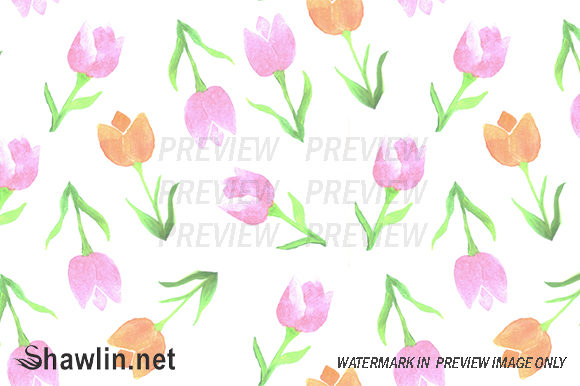
Watercolor tulip designs stand apart from vector-based floral illustrations or rigid photographic cutouts. The watercolor technique introduces natural variations in opacity, texture, and color blending. Each bloom and leaf carries subtle shifts in tone, giving the impression of light passing through pigment on paper. This organic quality makes a watercolor tulips background feel alive, even when used as a repeating element or a static backdrop.
When evaluating such a resource, several characteristics matter. The color palette should feel cohesive yet nuanced. Tulips come in a wide range of hues—from soft pastel pinks and creamy whites to deep burgundies and vivid oranges. A strong watercolor tulips background will either offer a curated palette that works well across different design contexts or provide enough variety to suit seasonal or thematic needs. The blending of colors within each petal and the way flowers interact with negative space also influences how easily the design integrates into larger compositions.
Texture plays an equally important role. Authentic watercolor effects show paper grain, paint pooling, and brush stroke edges. These imperfections are actually assets—they prevent the background from looking sterile or computer-generated. A high-quality watercolor tulips background will retain these subtle textural details without becoming noisy or distracting at larger scales.
The Practical Value of Seamless Patterns in Design Work
Beyond individual backgrounds, seamless patterns with watercolor tulips open up even more creative possibilities. A seamless pattern tiles infinitely without visible seams or abrupt transitions, making it ideal for repeat applications. Fabric printing, wallpaper design, gift wrap, and digital backdrops all benefit from patterns that flow naturally across large areas. The challenge with watercolor elements is maintaining that seamless quality, since the organic, irregular nature of painted shapes does not always align neatly with tile boundaries. When done correctly, a watercolor tulips seamless pattern feels like a continuous hand-painted surface rather than a repeated digital stamp.
For product designers, this capability is invaluable. Imagine a stationery line where every notebook cover, envelope liner, and card interior uses the same floral motif without any visible repetition lines. Or consider a fabric collection where tulips flow across yard after yard of material in a natural rhythm. A watercolor tulips seamless pattern makes these applications possible with minimal extra effort. The pattern can be scaled, rotated, or cropped while maintaining its visual integrity, giving designers freedom to experiment without worrying about technical flaws.
In digital contexts—such as website backgrounds, email headers, or app interfaces—seamless patterns offer a subtle way to reinforce a brand's visual identity. A muted watercolor tulips background used as a page backdrop can create warmth and approachability, while a more vibrant pattern can energize a promotional banner. Because the pattern repeats smoothly, it works across screens of any size, from mobile phones to large monitors.
File Formats and Compatibility: Why EPS 8, PNG, and JPG Matter
One of the most practical considerations when choosing a watercolor tulips background is file format compatibility. The provided asset pack includes a Vector EPS 8 file, which is particularly noteworthy. EPS 8 is an older version of the Encapsulated PostScript format, and its inclusion ensures that users working with legacy design software—or those who prefer not to upgrade—can still open and edit the file. Many contemporary vector formats require the latest software versions, but EPS 8 maintains broad compatibility across platforms. This makes the watercolor tulips background accessible to a wider range of users, from professional studios to hobbyists running older versions of Adobe Illustrator or CorelDRAW.
The vector format also means that the design can be scaled infinitely without losing resolution. Need a watercolor tulips background for a billboard? Scale it up. Need the same design for a business card? Scale it down. The vector data preserves every curve and color transition, so the quality remains consistent regardless of size. This scalability is a significant advantage over raster-only assets, which become pixelated or blurry when enlarged.
Alongside the EPS file, the package includes PNG and high-resolution JPG formats. The PNG file is ideal for web use, especially when transparency is required. Layering a watercolor tulips background over another design element or placing it on a colored backdrop becomes straightforward with a transparent PNG. The high-resolution JPG, on the other hand, serves print purposes well. At 300 DPI or higher, the JPG version retains the watercolor details in crisp detail, suitable for brochures, posters, or product packaging. Having all three formats in one download eliminates the need to convert files or re-export from software, saving time and reducing the risk of quality loss.
How a Watercolor Tulips Background Fits into Modern Creative Workflows
Today's designers often juggle multiple projects across different media. A single watercolor tulips background can serve a surprising range of purposes. For a wedding invitation suite, the background might become the main decorative element, with text overlaid in a clean serif font. For a botanical brand's social media templates, the same background could be cropped and color-adjusted to fit a square Instagram post or a vertical story. For a home decor brand, the seamless pattern version might be used to create mockups of throw pillows, duvet covers, or wall art.
Content creators who produce video or motion graphics can also benefit. Importing a watercolor tulips background into After Effects or Premiere Pro as a still image or texture layer adds visual interest behind titles, transitions, or lower thirds. The high-resolution JPG holds up well in video projects where the camera moves or zooms, and the transparent PNG allows for creative compositing with other footage. Even if motion blur or subtle animations are applied, the watercolor textures retain their handcrafted feel.
For print-on-demand sellers, the watercolor tulips seamless pattern is particularly valuable. Products like phone cases, mugs, tote bags, and journals benefit from all-over prints that look cohesive and artistic. Instead of designing custom artwork for each product, sellers can use the pattern across an entire catalog, maintaining a consistent visual language. The availability of vector and high-resolution formats means that even large product mockups—like duvet covers or shower curtains—can be produced without pixelation.
Practical Tips for Using Watercolor Tulip Designs Effectively
To get the most out of a watercolor tulips background, consider the context in which it will be viewed. Watercolor elements work beautifully when paired with simple typography and ample white space. Overloading a design with too many competing textures or busy fonts can diminish the subtle beauty of the painted flowers. Instead, let the background breathe. Use it as a full-page backdrop with minimal overlay, or as a partial element that frames or highlights specific content.
Color matching also matters. Even though watercolor tulips come in a preset palette, you may want to sample colors from the design to use elsewhere in your project—for headers, buttons, or accent lines. Most design software makes this easy with an eyedropper tool. Drawing colors directly from the watercolor tulips background creates a unified look that feels intentional and harmonious.
If you are using the seamless pattern in a print project, always do a test print first. Watercolor textures can sometimes appear differently on coated versus uncoated paper, or on fabric versus vinyl. Running a small sample ensures that the opacity and color saturation meet your expectations before committing to a larger run. The EPS vector file gives you the option to adjust individual elements if needed, so you are not locked into a single version of the design.
What to Consider Before Choosing a Watercolor Tulips Background
Not every watercolor tulips background suits every project. Take time to assess the style and mood of the artwork. Is the palette muted and romantic, or bright and energetic? Are the tulips rendered in a loose, impressionistic manner, or with more defined shapes and details? A background that feels too busy for a minimalist brand might be perfect for a children's book illustration or a festival poster. Understanding the overall tone of the design helps you match it to the right use case.
Licensing is another factor. While the asset is provided for use, always check the terms regarding commercial projects, resale, or redistribution. Some packs allow unlimited use, while others restrict certain applications. Knowing the licensing upfront prevents issues down the line, especially if you plan to use the watercolor tulips background in products you sell.
File organization and naming conventions might seem trivial, but they matter in a fast-paced workflow. A well-structured asset pack with clearly labeled formats saves time when you are searching for the right file. The inclusion of EPS 8, PNG, and JPG gives you options, but having them clearly named and sorted means you can grab exactly what you need without digging through folders.
The Lasting Appeal of Watercolor Tulips in Design
Tulips have a distinctive shape that is instantly recognizable yet endlessly adaptable. Their elegant silhouette works well in both minimal and elaborate arrangements. When combined with watercolor's fluid unpredictability, each tulip becomes slightly unique—no two petals are exactly the same. This combination of familiarity and variation is what makes a watercolor tulips background such a reliable design tool. It feels personal, handmade, and authentic, even when used in mass-produced applications.
Whether you are a seasoned graphic designer, a small business owner creating your own marketing materials, or a crafter exploring digital design, the availability of a high-quality, multi-format watercolor tulips background empowers you to work faster and more creatively. The seamless pattern extends that utility even further, allowing for consistent branding across products and platforms. And with the inclusion of EPS 8, PNG, and JPG files, compatibility and quality are never concerns. You can focus on what you do best: creating beautiful, meaningful designs that resonate with your audience.